How to Start an Airbnb in Kenya: Licences, Tax & Costs (2026)
Key takeaways
- Short-term rental is a licensed tourism business in Kenya — expect a TRA licence around KES 26,000 per year per unit, plus a KES 1,000 application fee.
- A county Single Business Permit is also mandatory, around KES 10,000 a year.
- TRA-licensed hosts remit a 2% tourism levy on gross monthly receipts.
- Airbnb income between KES 288,000 and KES 15 million a year falls under KRA's Monthly Rental Income tax, charged on gross rent as a final tax.
- Renters need written landlord consent — the TRA expects a lease that expressly permits short-term letting.
- Nairobi runs on year-round business travel; the Coast is seasonal; Naivasha and Nanyuki run on weekends and events.
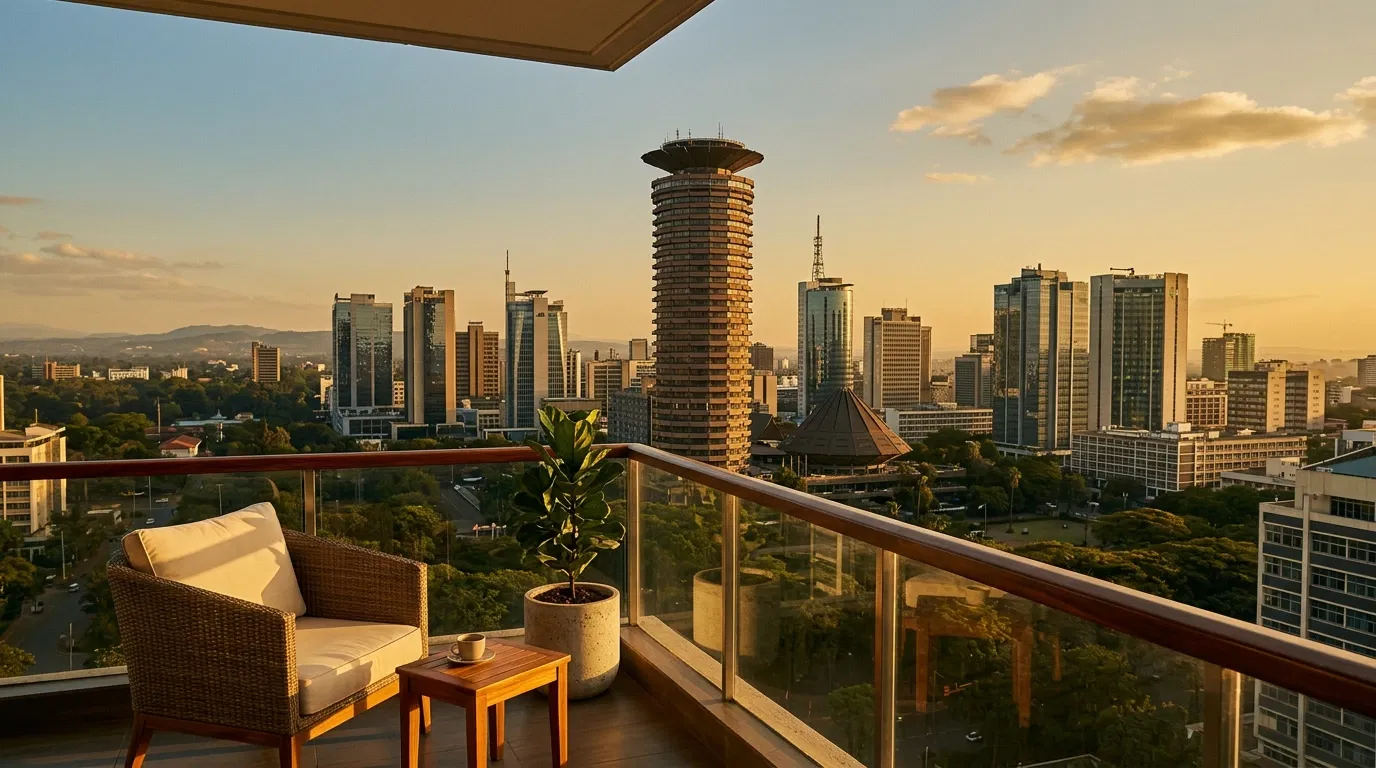
Kenya is one of the strongest short-stay markets on the continent, and it has depth that most African markets don't: Nairobi runs on business travel, conferences and NGO traffic all year; the Coast runs on holiday demand; and Naivasha, Nanyuki and the Mara run on safari and event seasons. Add a large diaspora coming home and a domestic middle class that now books weekends away, and you have demand that doesn't collapse the moment tourists stop flying.
If you own a flat in Kilimani, a villa in Diani, a cottage near Naivasha, or a spare unit anywhere with decent traffic, that space can earn far more per month than a standard tenancy — provided you treat it as a business and not a favour.
Here's what it actually takes.
Start here: Create your Airbnb host account
1. Location decides most of your income
Before furniture, before photos, before anything — be clear about which market your property sits in, because each behaves completely differently.
Nairobi (Kilimani, Westlands, Kileleshwa, Lavington, Gigiri, Riverside). Business and NGO travel. Steady all year, weaker in December when the city empties. Guests want fast wifi, backup power, secure parking and a desk. Stays are often 3 nights to 3 weeks.
The Coast (Diani, Nyali, Watamu, Kilifi, Malindi). Holiday demand. Very seasonal — December–January and July–August are gold, April–May is quiet. Guests want a pool, space for groups, and proximity to the beach. Longer stays, bigger groups, higher nightly rates in season.
Naivasha, Nanyuki, Nakuru. Weekend and event demand — the Safari Rally, team retreats, road-trip weekends from Nairobi. Fridays and Saturdays carry the whole month.
Near the Mara and other parks. Safari-linked, premium pricing, but you're competing with camps and lodges. Needs a genuine differentiator.
If your property doesn't fall into one of these, be realistic. A unit far from demand may earn more from a normal 12-month tenant.
2. Get compliant before you get guests
This is where Kenyan hosts most often get burned. Short-stay hosting is a regulated tourism business here, not an informal side hustle — and enforcement has tightened.
Tourism Regulatory Authority (TRA) licence. Under Section 7(1)(c) of the Tourism Act 2011 and Part III of the TRA Regulations 2014, anyone carrying out a tourism business or service must be licensed by the TRA. Registration involves a one-off application fee of KES 1,000 plus an annual licence fee per unit, along with a copy of your ID or passport (or a certificate of incorporation for a company) and a copy of your PIN certificate. Serviced flats and apartments, villas, holiday cottages and timeshares are charged in the region of KES 26,000 per year. Hosts are also required to register a business, present documentation to the TRA — including a lease agreement in which the landlord expressly agrees to a short-term rental business — and have the unit and its amenities inspected for safety before a licence is issued.
County single business permit. A Single Business Permit from your county government is mandatory for all businesses and costs in the region of KES 10,000. In Nairobi this is issued by Nairobi City County and renewed each year. Fees vary by county, so check yours.
NEMA. An environmental licence is also cited as a requirement for short-term rental properties under the Environmental Management and Coordination Act. Confirm what applies to your specific property type.
Tourism levy. Hosts holding a TRA licence are required to remit 2% of gross monthly receipts from accommodation, food, drinks and other services to the Tourism Regulatory Authority.
3. Understand the tax before KRA understands you
Airbnb income is taxable in Kenya, full stop, and KRA has been actively closing the gap on hosts who assume otherwise.
Monthly Rental Income (MRI). MRI is payable by a resident person on rental income from residential property earning above KES 288,000 but not exceeding KES 15 million a year. It is charged on gross rent received and is a final tax, and income from Airbnb and furnished apartments falls within this regime. The rate is the moving part: KRA's published rate was 7.5% on gross rent effective 1 January 2024, while the Finance Bill 2026 raises the residential rental income rate from 7.5% to 10%. Confirm the rate currently in force on iTax before you file — this one changed recently and may change again.
Above the threshold. If your rental income exceeds KES 15 million a year, you declare it together with income from other sources in your annual income tax return instead.
VAT. If you are required to charge VAT, you must collect it from guests and remit it to KRA by the 20th day of the following month.
Non-resident owners. If you are in the diaspora, note that the Finance Bill 2026 introduces a rule requiring the tenant or agent to withhold 30% of gross rent paid to a non-resident from Kenyan immovable property, as a final tax — with treaty relief available for residents of countries holding a tax treaty with Kenya.
Why this matters now. Late payment attracts 2% interest per month compounding. KRA can raise an additional assessment covering up to five years back if it finds undeclared rental income, and understatement penalties run at 20% for negligence and up to 100% for deliberate concealment.
Rates, thresholds and rules change with each Finance Act. Verify everything above with KRA or a tax advisor before you start.
4. Set the property up for the guest you want
Internet first. In Nairobi this is the single biggest driver of reviews. Get proper fibre — Safaricom Home, Zuku, Faiba — not a router on mobile data. Put the actual speed in your listing.
Solve for power and water. Backup power and a water tank turn a blackout or a dry tap into a non-event instead of a one-star review. In Nairobi this is table stakes; on the Coast it's non-negotiable.
Self check-in. Guests land at Jomo Kenyatta at 2 a.m. A lockbox or smart lock, plus clear directions to the gate and the security desk, saves you and them.
Security is a selling point — say it out loud. Gated compound, 24-hour guard, CCTV at the entrance, secure parking. Put it in the description; international guests are looking for exactly this.
A real kitchen. Long-stay guests — consultants, diaspora families, anyone on a three-week contract — will choose a place they can cook in every single time.
On the Coast: mosquito nets, working fans or AC, and an honest photo of how far the beach really is.
5. Build a listing that actually gets booked
Most new hosts lose their first three months to a weak listing, not a weak market.
Photography is your highest-ROI spend. Shoot in daylight, declutter completely, open every curtain. A professional session in Nairobi runs roughly KES 8,000–25,000 and pays for itself in a couple of extra bookings.
Write for a specific guest. "Two-bedroom in Kilimani, 200 Mbps fibre, backup power, secure parking, 10 min to Yaya Centre" beats "lovely home, very clean" every time.
Price to the season, not to your hopes. On the Coast, December–January and July–August carry the year; drop hard in April–May or pivot to monthly stays. In Nairobi, hold steadier rates but fill December with longer bookings before the city empties.
Buy your first ten reviews. Underprice deliberately at launch, over-deliver on cleanliness, reply within minutes, leave a welcome note. Then raise your rates. Your rating is the asset — everything else is replaceable.
M-Pesa matters. Sort out how you'll handle payouts and any direct-booking requests early, and be clear with guests about what the platform covers versus what it doesn't.
6. Run the numbers honestly
Monthly revenue = nightly rate × nights actually booked
Monthly costs   = cleaning + internet + power/water + supplies + platform fee
                  + repairs + TRA licence + county permit + tax provision
                  + 2% tourism levy
Compare that against 12 months of ordinary rent on the same unit. In Kilimani or Diani, short-stay usually wins comfortably. In a low-traffic area at 8 nights booked a month, it usually doesn't. Do this calculation before you spend a shilling on furniture.
Ready to list?
Setting up takes about thirty minutes: create your account, add the property, upload photos, set your rate, and publish. You control your calendar entirely, and you can unlist any time.
👉 Start your Airbnb host listing here
Get the licence, get the photos right, and get your first ten reviews. After that it's just a business you run well.
General information only — not legal or tax advice. Licensing and tax requirements change; confirm current rules with the Tourism Regulatory Authority, your county government, and KRA before hosting. The link above is a referral link.
Frequently Asked Questions
Do I need a licence to run an Airbnb in Kenya?
Yes. Short-term rental is treated as a tourism business in Kenya, so you need a licence from the Tourism Regulatory Authority (TRA) — a one-off application fee of around KES 1,000 plus an annual fee per unit, roughly KES 26,000 for a serviced apartment or villa. You also need a Single Business Permit from your county government, and your unit will be inspected for safety before the licence is issued. Check whether a NEMA environmental licence applies to your property type.
Which areas in Kenya are best for Airbnb hosting?
Nairobi neighbourhoods such as Kilimani, Westlands, Kileleshwa, Lavington and Gigiri serve steady business and NGO travel year-round. The Coast — Diani, Nyali, Watamu, Kilifi and Malindi — is highly seasonal, peaking in December to January and July to August. Naivasha, Nanyuki and Nakuru run on weekend and event demand from Nairobi. Areas far from these demand centres often earn more from a standard 12-month tenancy.
How much tax will I pay on my Airbnb income in Kenya?
Airbnb income falls under KRA's Monthly Rental Income (MRI) regime if you earn between KES 288,000 and KES 15 million a year. It is charged on gross rent received and is a final tax. The published rate was 7.5% from January 2024, and the Finance Bill 2026 raises it to 10% — confirm the rate currently in force on iTax before filing. Above KES 15 million a year, you declare the income in your annual return instead. Licensed hosts also remit 2% of gross receipts to the TRA as a tourism levy.
Can I host on Airbnb if I am renting the property rather than owning it?
Only with your landlord's written agreement. The TRA specifically expects a lease in which the landlord expressly permits a short-term rental business, so a verbal understanding is not enough. Check your building's or estate's rules too — many gated communities restrict short-stay guests.
How much can I realistically earn from an Airbnb in Kenya?
Earnings depend almost entirely on location and occupancy rather than on how well furnished the unit is. Calculate your nightly rate multiplied by nights actually booked, then subtract cleaning, internet, power and water, supplies, platform fees, repairs, licence and permit costs, the 2% tourism levy and your tax provision. Compare that to twelve months of ordinary rent on the same property. In Kilimani or Diani short-stay usually wins comfortably; in a low-demand area at eight booked nights a month it usually does not.